
Barley is one of the world’s oldest cultivated cereals and a hardy Rabi crop grown in colder, drier regions of India. It is uniquely tolerant of drought, salinity, and alkaline soils where wheat fails. Used for malting (beer, whisky), animal feed, and as a nutritious food grain in Rajasthan and UP.
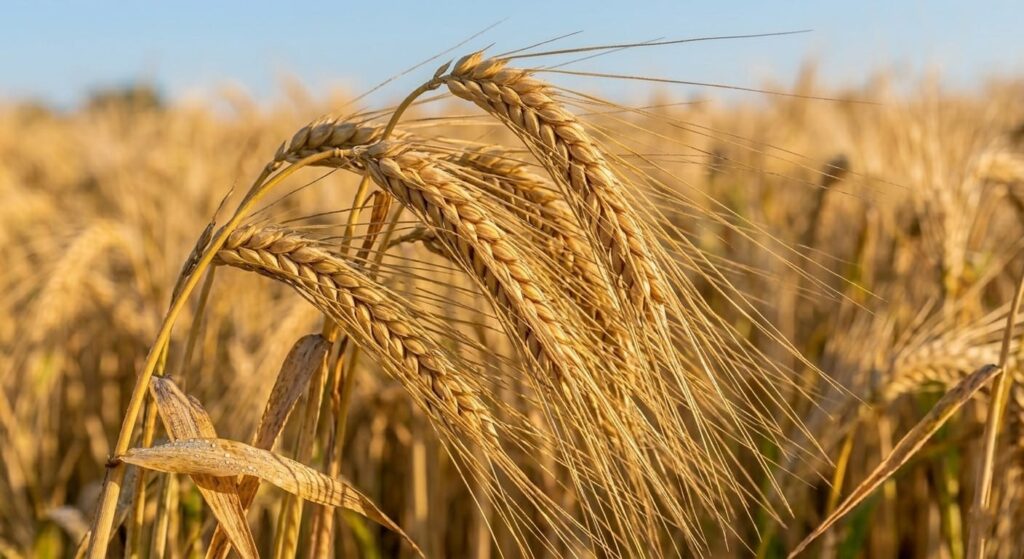
Barley
Hordeum vulgare
Cereal Overview
Common Pests
Aphids (Bird Cherry Aphid)
Symptoms:
Dense colonies on leaves and ears; honeydew promotes sooty mold; weakens plants.
Termites
Symptoms:
Chewed root crowns, wilting patches, easy uprooting of affected plants.
Common Diseases
Barley Stripe Disease (Pyrenophora graminea)
Symptoms:
Yellow stripes running the length of leaves; infected plants die before heading.
Treatment:
Remove and burn infected plants; ensure crop rotation.
Loose Smut (Ustilago nuda)
Symptoms:
Ear heads replaced by mass of black powdery spores; entire grain yield lost.
Treatment:
Rogue out infected plants at early heading; avoid threshing smutted grain with healthy grain.
Soil Requirements
Barley's major advantage is its tolerance to marginal soils — saline, alkaline, and less fertile soils where wheat struggles. Well-drained loamy soils with pH up to 8.0 are acceptable.