
Ragi is the most nutritious small millet — containing 10x more calcium than wheat and rice combined. It is a life-saving crop for tribal and marginal farming communities in Karnataka, Andhra Pradesh, and Odisha. Ragi can withstand high temperatures, drought, and poor soils where no other cereal survives. It has remarkable storage life of more than 50 years.
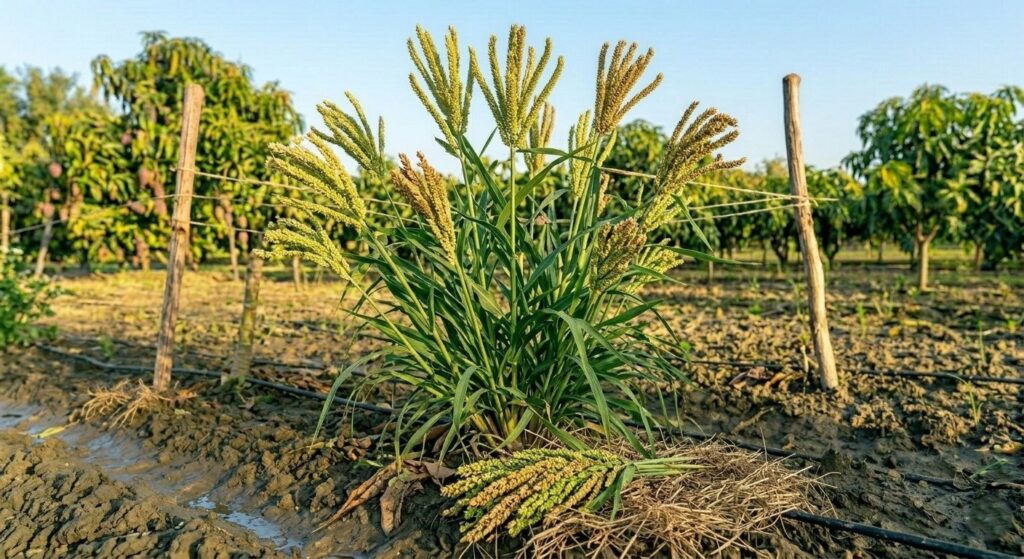
Ragi (Finger Millet)
Eleusine coracana
Cereal Overview
Common Pests
Ragi Aphid (Rhopalosiphum maidis)
Symptoms:
Yellowing and curling of leaves, reduced tillering, honeydew fouling of grain at ear head stage.
Stem Fly
Symptoms:
Dead hearts in seedlings; whitish maggots inside wilted central shoots.
Common Diseases
Blast (Pyricularia grisea)
Symptoms:
Oval to spindle-shaped lesions on leaves and neck; severe neck blast causes total grain loss — 'beheading' of panicle.
Treatment:
Apply tricyclazole-based bio-fungicide; reduce humidity by improving spacing.
Head Smut (Tilletia eleusines)
Symptoms:
Ear heads replaced by smutted (black powder) galls; grain yield completely lost in affected heads.
Treatment:
Rogue out smutted heads before spore dispersal; practice crop rotation.
Soil Requirements
Ragi's greatest strength is its ability to grow on poor red laterite soils, degraded hillsides, and marginal land that cannot support other cereals. It fixes well even in acidic soils, making it perfect for tribal farming areas in the Western Ghats region.