
Sesame is one of mankind’s oldest oilseed crops — cultivated for over 5000 years — and India is among the world’s top producers. Known as the ‘queen of oilseeds’, sesame seeds contain 44–58% premium edible oil rich in sesamol and sesamine antioxidants, making it highly resistant to rancidity. The crop is exceptionally heat- and drought-tolerant.
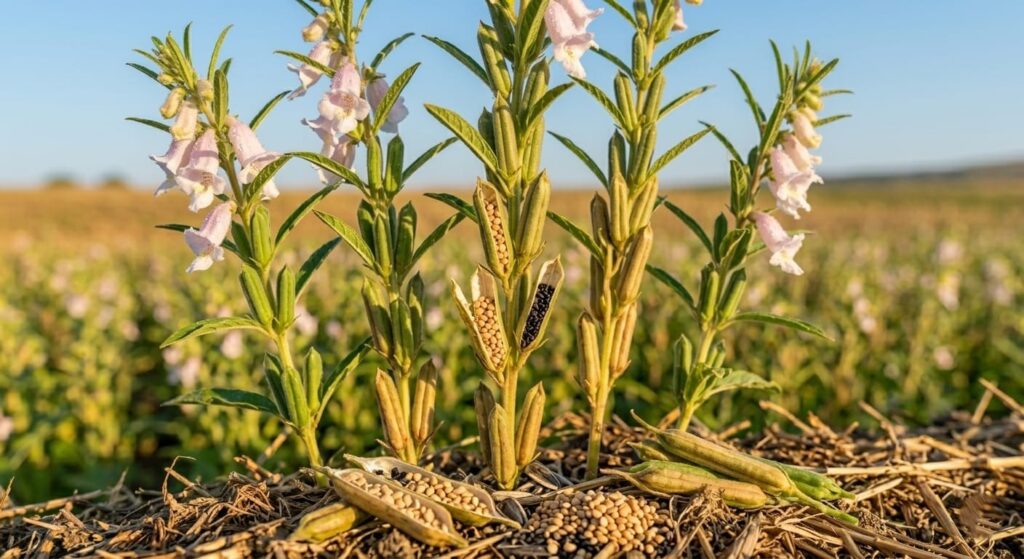
Sesame (Til)
Sesamum indicum
Oilseed Overview
Common Pests
Sesame Gall Midge (Asphondylia sesami)
Symptoms:
Flowers and buds transformed into galls; green oval swellings on stems; flower drop.
Leaf Roller (Antigastra catalaunalis)
Symptoms:
Rolled leaves tied with silk webbing; caterpillar feeding inside rolled leaf tunnel.
Common Diseases
Phyllody (Phytoplasma disease)
Symptoms:
Flowers turn leafy (virescence); flower petals replaced by small leaf-like structures; no seed set.
Treatment:
Remove and destroy infected plants; no cure once infected — prevention is critical.
Alternaria Leaf Spot
Symptoms:
Circular dark brown spots on leaves and capsules; caused by Alternaria sesami.
Treatment:
Apply neem oil-based spray early; remove infected plant parts promptly.
Soil Requirements
Sesame has remarkable tolerance to a wide range of soil types but grows best on well-drained sandy loam or red loam soils with neutral pH. Avoid waterlogged conditions — the crop is extremely sensitive to standing water even for short periods.