
Pigeon pea (arhar/tur) is India’s second most important pulse and the backbone of daily dal nutrition for hundreds of millions of Indians. It is uniquely adapted to semi-arid tropical conditions — deep tap roots access moisture from 3 metres underground. The crop serves triple duty: pulse grain for human consumption, nutritious fodder for animals, and substantial nitrogen fixation for soil health.
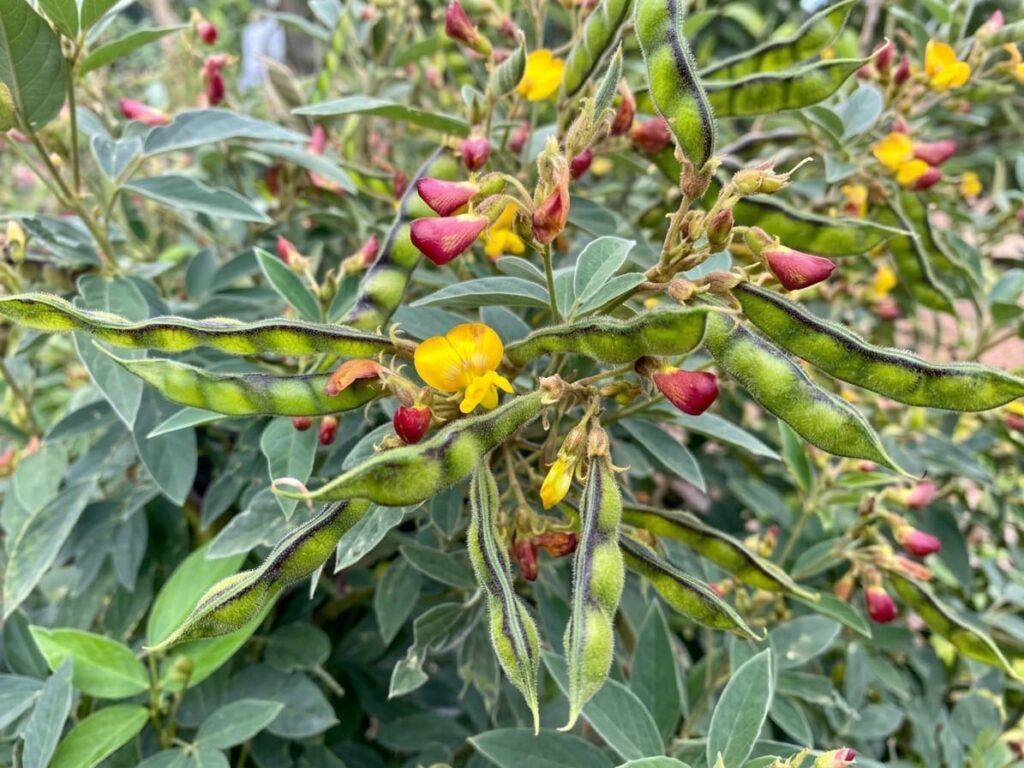
Pigeon Pea (Arhar / Tur Dal)
Cajanus cajan
Pulse Overview
Common Pests
Pod Fly (Melanagromyza obtusa)
Symptoms:
Maggots inside pods feeding on seeds; adult fly exit hole visible on mature pod; shrivelled seeds.
Pod Borer (Helicoverpa armigera)
Symptoms:
Round holes in pods; caterpillar feeding inside developing seeds; heavy pod drop.
Common Diseases
Fusarium Wilt (Fusarium udum)
Symptoms:
Young seedlings collapse at soil level; older plants wilt suddenly; dark brown woody vascular tissue.
Treatment:
Remove infected plants; drench soil with trichoderma solution; practice 4-year rotation.
Sterility Mosaic (Pigeon Pea Sterility Mosaic Virus)
Symptoms:
Mosaic and mottling of leaves; complete sterility — plant produces no pods but looks healthy; spread by mite vector.
Treatment:
Remove and destroy infected plants immediately to prevent spread; no chemical cure.
Soil Requirements
Pigeon pea's deep tap root system makes it uniquely successful on well-drained medium-weight soils. It thrives on residual soil moisture and can survive extended dry periods better than most crops. Avoid waterlogged or compacted soils that restrict deep root development.