
Lentil is one of humanity’s oldest food crops and a dietary staple across all of India. The thin, flat seeds split easily into orange-red dal (masoor) — a foundational ingredient in Indian cooking. Madhya Pradesh and Uttar Pradesh dominate Indian production. Lentils have an exceptional protein-to-calorie ratio and cook quickly, making them accessible to all income groups.
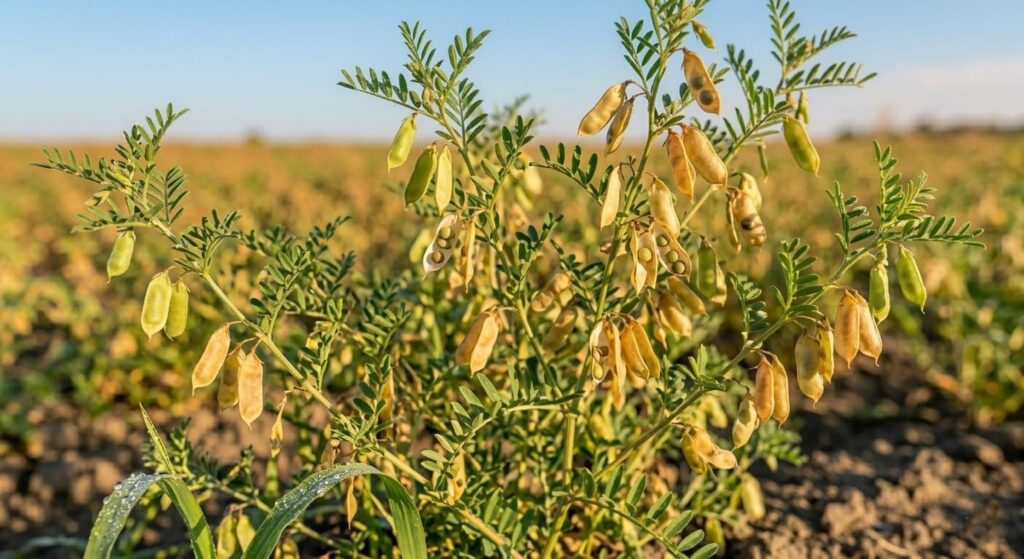
Lentil (Masoor Dal)
Lens culinaris
Pulse Overview
Common Pests
Aphids (Aphis craccivora)
Symptoms:
Dense colonies on tender shoots and pods; honeydew; sooty mold; severely stunted plants.
Pod Borer (Helicoverpa armigera)
Symptoms:
Caterpillar entry holes in pods; developing seeds consumed; significant yield loss.
Common Diseases
Rust (Uromyces viciae-fabae)
Symptoms:
Cinnamon-brown powdery pustules on leaves and stems; premature defoliation in severe cases.
Treatment:
Apply sulfur-based organic fungicide at first pustule appearance; remove infected debris.
Wilt (Fusarium oxysporum)
Symptoms:
Sudden wilting and yellowing at post-flowering stage; vascular browning inside root and stem.
Treatment:
Remove infected plants; improve soil drainage; apply bio-control agents to soil.
Soil Requirements
Lentil is highly adaptable and grows on light to medium soils with good drainage. It performs well on residual moisture after kharif crops without irrigation. Avoid waterlogged or very sandy fast-draining soils.