
Bajra is the most widely grown millet in India and a lifeline crop for arid and semi-arid regions. It thrives where other cereals fail — in Rajasthan’s sandy deserts and Gujarat’s dry plains. Rich in protein, iron, and zinc, it is a key food security crop and increasingly valued as a nutri-cereal.
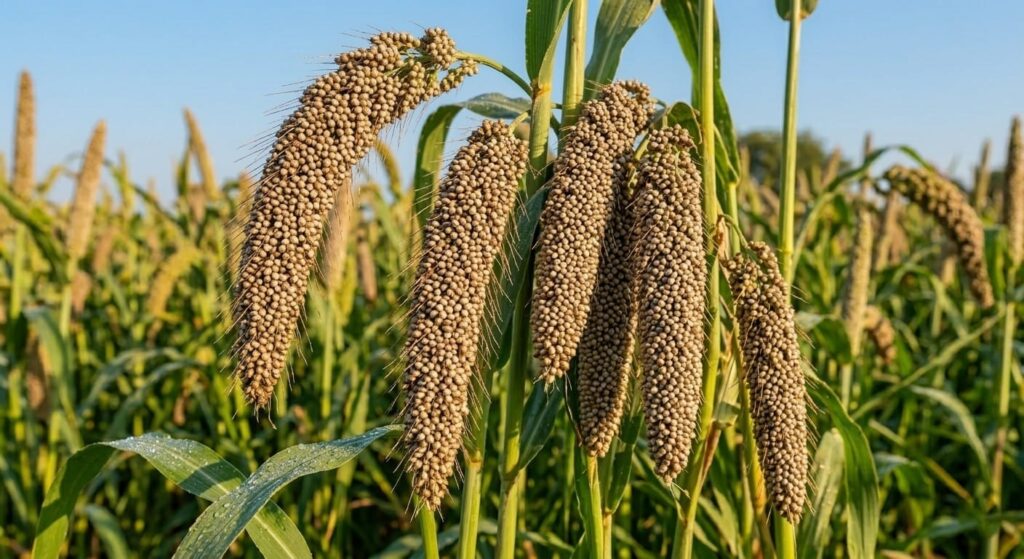
Bajra (Pearl Millet)
Pennisetum glaucum
Cereal Overview
Common Pests
Shoot Fly (Atherigona approximata)
Symptoms:
Dead heart symptom in seedlings, withered central shoot, frass inside damaged stem.
Stem Borer (Chilo partellus)
Symptoms:
Tunneling in stems, dead hearts in vegetative stage, lodging of older plants.
Common Diseases
Downy Mildew (Green Ear Disease)
Symptoms:
Leaves with pale green to yellow streaks, ear heads produce leafy structures instead of grains.
Treatment:
Remove and destroy infected plants; avoid waterlogging in fields.
Ergot (Claviceps fusiformis)
Symptoms:
Pink to honey-coloured sticky exudate from florets; hard black sclerotia replace grains.
Treatment:
Remove infected ear heads before sclerotia formation; rotate with legumes.
Soil Requirements
Bajra performs best in well-drained sandy loam or red laterite soils. Excellent drought tolerance makes it the ideal crop for low-rainfall, less-fertile soils where other cereals cannot survive.