
Castor is one of India’s most economically unique crops — the oil is non-edible but extraordinarily valuable for industrial applications including lubricants, biofuels, cosmetics, pharmaceuticals, and plastics. India supplies over 70% of the world’s castor oil, with Gujarat dominating 80% of domestic production. It is a hardy perennial shrub grown as an annual that can withstand extreme drought.
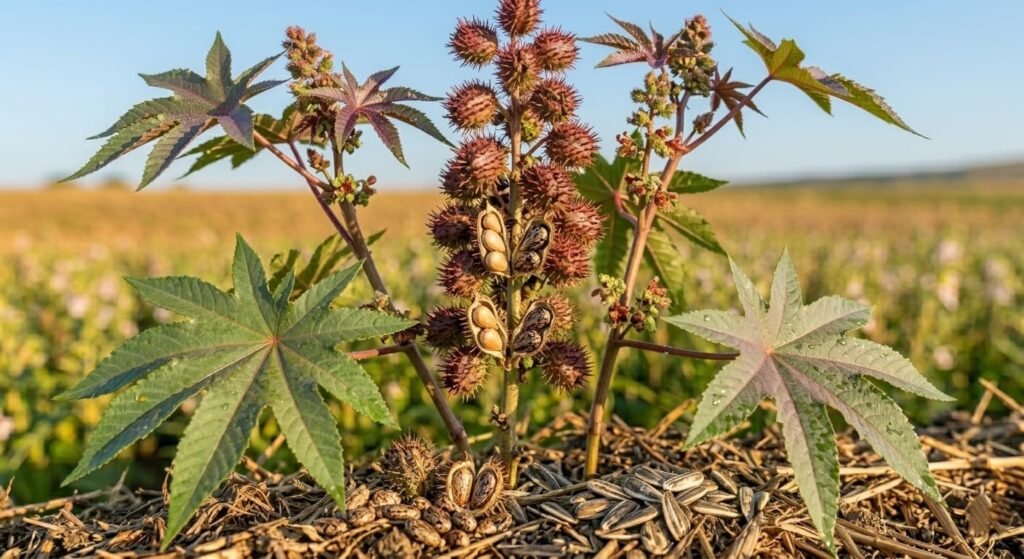
Castor
Ricinus communis
Oilseed Overview
Common Pests
Castor Capsule Borer (Conogethes punctiferalis)
Symptoms:
Caterpillars boring into developing capsules; silk webbing binding spikes; severe seed loss.
Tobacco Caterpillar (Spodoptera litura)
Symptoms:
Group feeding on leaves by young caterpillars; skeletal leaves; complete defoliation in outbreaks.
Common Diseases
Fusarium Wilt (Fusarium oxysporum f.sp. ricini)
Symptoms:
Yellowing and wilting of leaves starting from lower canopy; dark discoloration in vascular tissue.
Treatment:
Apply trichoderma viride bio-control to soil; remove infected plants and improve drainage.
Gray Mold (Botrytis cinerea)
Symptoms:
Grayish-white mold on inflorescences and young capsules during humid conditions; spike abortion.
Treatment:
Remove infected spikes immediately; spray neem oil at early disease onset.
Soil Requirements
Castor thrives on deep, well-drained soils and is highly adaptable to poor, marginal lands. It tolerates mild salinity and alkalinity. Excellent drainage is essential — waterlogging causes root rot and plant collapse within days.