
Cowpea is the most heat- and drought-tolerant food legume in the world, making it invaluable for climate-resilient agriculture in tropical India. It serves three agricultural roles simultaneously — pulse grain for human consumption, high-protein fodder for livestock, and green manure for soil improvement. Known as the ‘poor man’s meat’ in rural South India, it is nutritionally superior to many common vegetables.
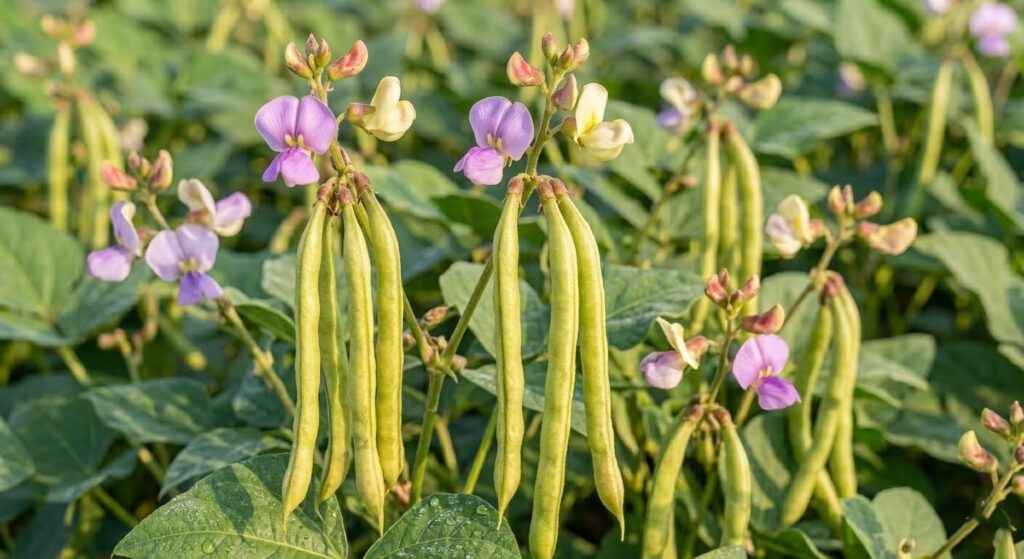
Cowpea (Lobia / Black-Eyed Pea)
Vigna unguiculata
Pulse Overview
Common Pests
Pod Borer (Maruca vitrata)
Symptoms:
Silk webbing binding flowers and pods together; caterpillar feeding on pod walls and seeds.
Aphids (Aphis craccivora)
Symptoms:
Dense black aphid colonies on growing points; honeydew leads to sooty mold; stunted plants.
Common Diseases
Mosaic Virus (Cowpea Mosaic Virus)
Symptoms:
Mosaic and blotching of leaves; severe stunting; reduced pod number and seed quality.
Treatment:
Remove infected plants immediately; manage aphid population; no chemical cure.
Cercospora Leaf Spot
Symptoms:
Circular to angular brown spots with gray centres on leaves; defoliation in severe cases.
Treatment:
Apply neem-based organic fungicide spray; remove heavily infected leaf material.
Soil Requirements
Cowpea's greatest advantage is its tolerance to sandy, low-fertility soils where other pulses fail. It grows on poor laterite soils, saline conditions, and compacted soils. Excellent drainage is needed — waterlogging for even 24 hours destroys the crop.