
Jowar is the world’s fifth most important cereal and India’s third most grown food crop. It is a dryland farming champion — heat-tolerant, drought-resistant, and capable of producing both grain and fodder on marginal soils. Maharashtra and Karnataka depend on jowar for roti (bhakri), animal feed, and biomass.
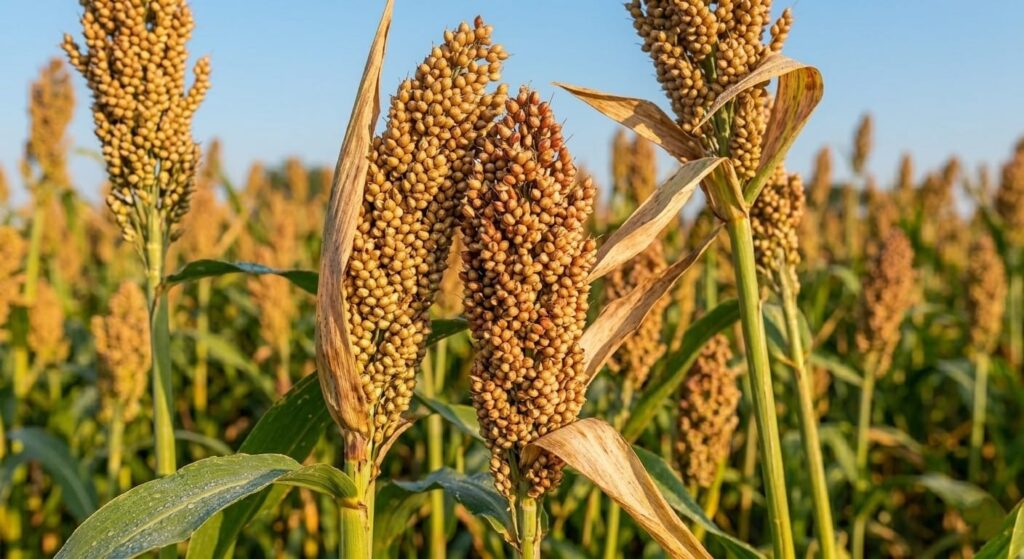
Jowar (Sorghum)
Sorghum bicolor
Cereal Overview
Common Pests
Shoot Fly (Atherigona soccata)
Symptoms:
Dead heart in seedlings, dried central shoot pulling out easily, maggot visible inside.
Sorghum Stem Borer (Chilo partellus)
Symptoms:
Window pane symptoms on young leaves, stem tunneling, dead heart and lodging.
Common Diseases
Grain Mold
Symptoms:
Pink, white, or black mold growth on developing grains; significant yield and quality loss.
Treatment:
Dry harvested grain quickly; avoid delayed harvest in humid conditions.
Anthracnose (Colletotrichum graminicola)
Symptoms:
Reddish-brown leaf spots with tan centres; stalk rot in severe cases.
Treatment:
Remove infected stalks; apply neem-based organic fungicide.
Soil Requirements
Jowar adapts to a wide range of soils but performs best in deep red loamy soils. It tolerates both acidic and mildly alkaline conditions, making it suitable for marginal farmlands.