
Jute is India’s most important natural fibre crop — golden, biodegradable, and eco-friendly, offering a sustainable alternative to plastic and synthetic fibres. India produces 75% of global jute and primarily cultivates it in the Ganga-Brahmaputra delta. The bast fibre from the stem is used for sacking, hessian cloth, carpet backing, and high-end fashion accessories.
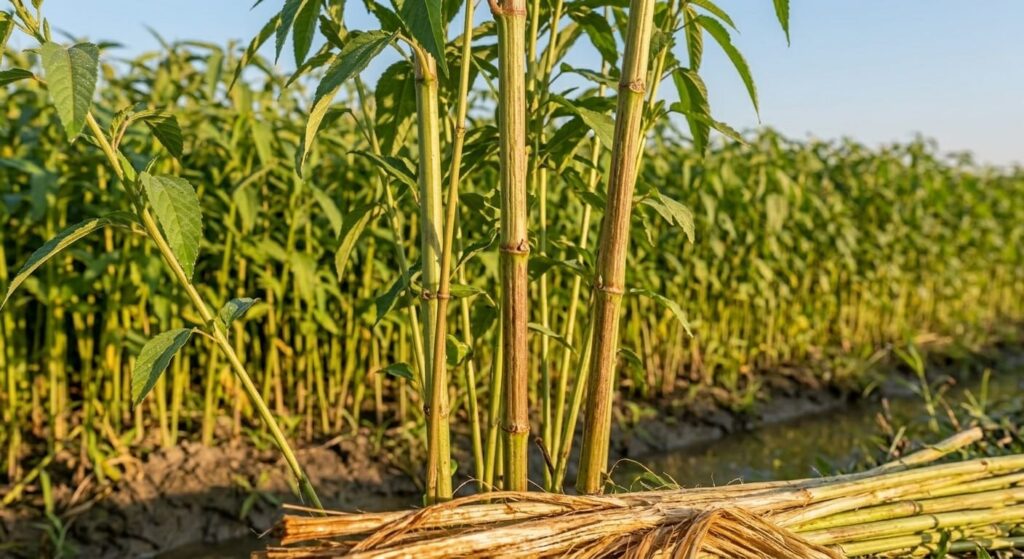
Jute
Corchorus olitorius
Cash Crop Overview
Common Pests
Jute Semilooper (Anomis sabulifera)
Symptoms:
Looping caterpillars skeletonizing leaves; heavy defoliation; total loss in seedlings.
Stem Weevil (Apion corchori)
Symptoms:
Galleries inside stem; galls at soil level; stunting and breakage of stalks.
Common Diseases
Stem Rot (Macrophomina phaseolina)
Symptoms:
Dark brown to black water-soaked lesions at stem base; rapid wilting and collapse.
Treatment:
Remove affected plants; improve drainage; apply trichoderma bio-control to soil.
Root Rot (Rhizoctonia solani)
Symptoms:
Browning and rotting of fine feeder roots; yellowing of lower leaves; plant wilting.
Treatment:
Improve drainage; drench with organic fungicide solution at soil level in affected patches.
Soil Requirements
Jute is best suited to well-drained new alluvial (charland) soils in river floodplain areas. It requires high humidity and ample rainfall during the growing season. Avoid heavy clay soils that retain excess water.