
Moong (green gram) is India’s most nutritious and easily digestible pulse — a gift to the nation’s health. Moong sprouts are consumed raw, moong dal is used in dal, pakoras, and khichdi, and moong flour is used in health foods. As a short-duration crop (60–65 days), it fits perfectly as a summer or catch crop between two main crops, and fixes 40–60 kg nitrogen per hectare.
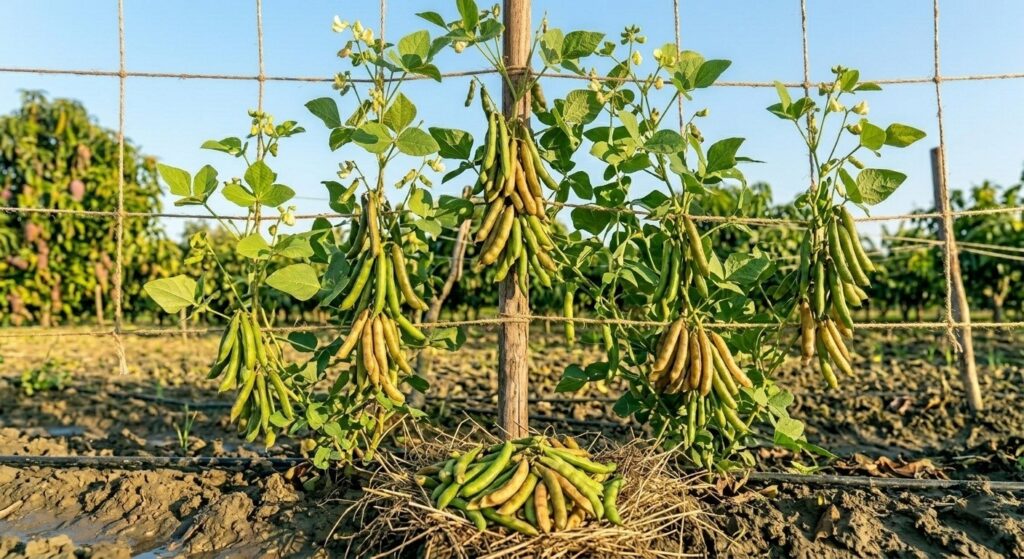
Moong (Green Gram)
Vigna radiata
Pulse Overview
Common Pests
Aphids (Aphis craccivora)
Symptoms:
Yellow-green colonies on growing tips; honeydew and sooty mold; transmit bean yellow mosaic virus.
Whitefly (Bemisia tabaci)
Symptoms:
Yellowing leaves; sooty mold; vectors yellow mosaic virus causing devastating crop losses.
Common Diseases
Yellow Mosaic Virus (YMV)
Symptoms:
Bright yellow and green mosaic patches on leaves; 80–100% yield loss in severe cases.
Treatment:
Remove infected plants immediately; manage whitefly; no chemical cure for viral disease.
Powdery Mildew (Erysiphe polygoni)
Symptoms:
White powdery coating on leaves and pods; reduced photosynthesis; premature defoliation.
Treatment:
Apply sulfur-based organic spray at appearance; repeat at 7–10 day intervals.
Soil Requirements
Moong performs best on light-textured, well-drained soils. As a catch crop, it grows remarkably well on residual fertility without additional fertilizer, making it an excellent soil health restorer between main crops.