
Mustard is India’s most important Rabi oilseed crop and the dominant cooking oil in North and East India. The spectacular show of bright yellow mustard flowers across Rajasthan and Haryana fields is iconic. India is the world’s third largest mustard producer. The pungent oil contains erucic acid valued for flavour, while the cake is prized as animal feed.
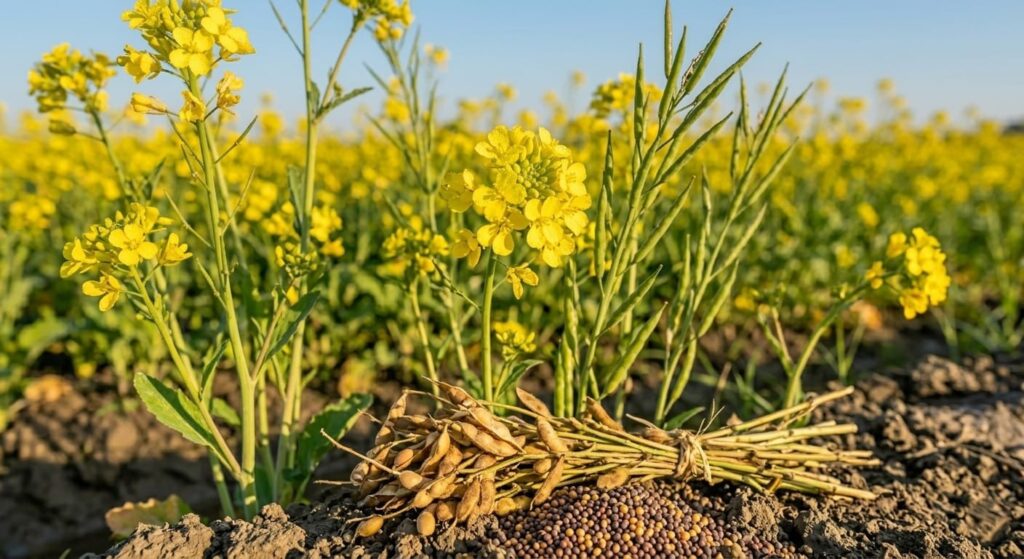
Mustard (Sarson / Rapeseed)
Brassica juncea
Oilseed Overview
Common Pests
Mustard Aphid (Lipaphis erysimi)
Symptoms:
Dense yellowish aphid colonies on growing shoots and pods; honeydew promotes sooty mold; pods fail to develop.
Sawfly (Athalia lugens proxima)
Symptoms:
Older larvae skeletonize leaves from edges inward; young plants defoliated completely causing total stand loss.
Common Diseases
Alternaria Blight (Alternaria brassicae)
Symptoms:
Circular dark brown spots with concentric rings on leaves; seed infection causing dark shrivelled seeds.
Treatment:
Apply organic neem-based fungicide spray at appearance of symptoms.
White Rust (Albugo candida)
Symptoms:
White powdery blister-like pustules on the underside of leaves, stems, and pods.
Treatment:
Remove heavily infected plant parts; improve air circulation by thinning.
Soil Requirements
Mustard performs well on light-textured, well-drained sandy loam soils and is highly tolerant of low-fertility conditions. Avoid waterlogged or excessively saline fields. A well-prepared fine seedbed is critical for uniform germination.