
Tomato is a major vegetable crop grown for fresh consumption and processing. It can be grown year-round in suitable climates.
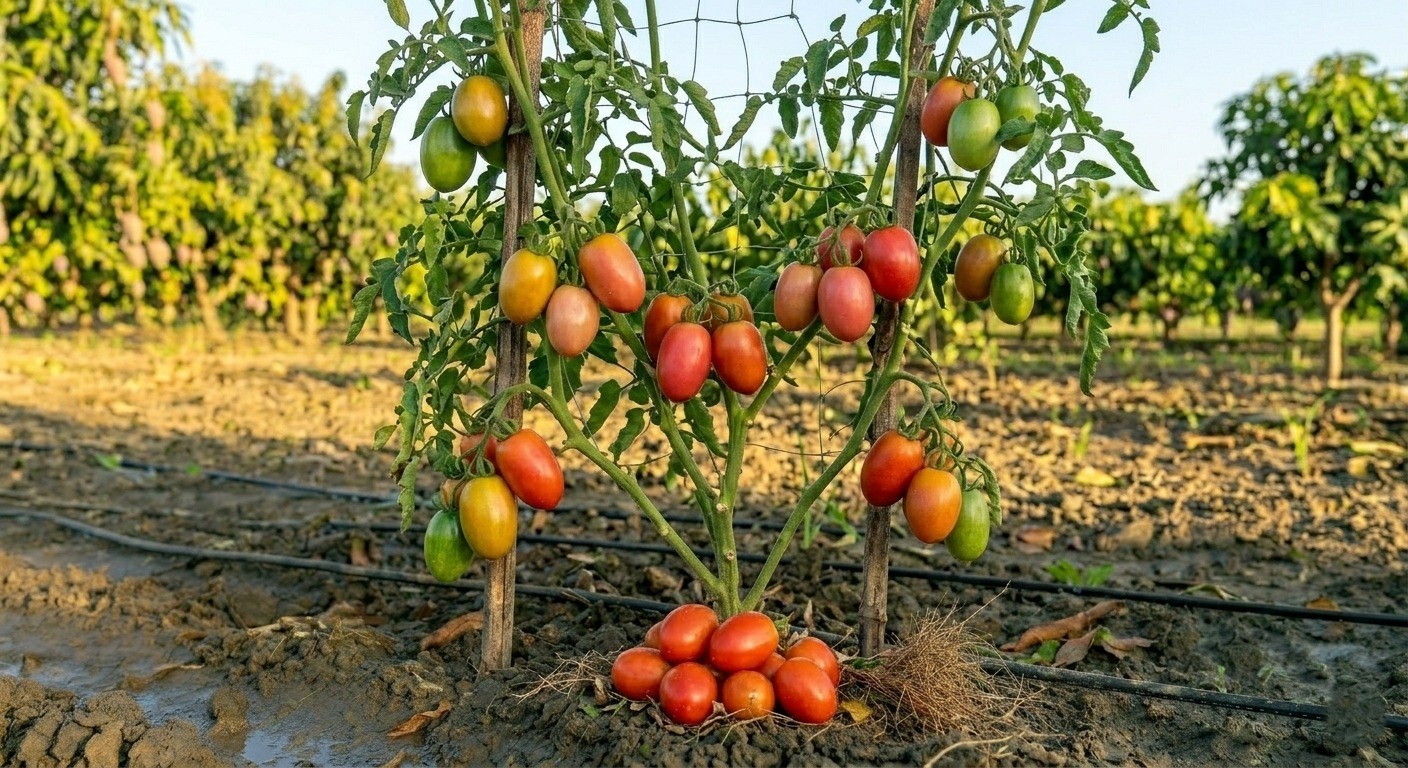
Tomato
Solanum lycopersicum
Vegetable
Overview
Common Pests
Tomato Fruit Borer (Helicoverpa armigera)
Symptoms:
Circular entry holes in fruits; larvae feeding inside; secondary rot follows caterpillar damage.
Whitefly (Bemisia tabaci)
Symptoms:
Yellowing of leaves; sooty mold; primary vector of tomato leaf curl virus causing 100% crop loss.
Common Diseases
Tomato Leaf Curl Virus (ToLCV)
Symptoms:
Severe upward curling of leaves; small brittle leaf size; stunted bushy plants; zero fruit set.
Treatment:
Remove infected plants immediately; apply neem oil spray to control whitefly.
Early Blight (Alternaria solani)
Symptoms:
Brown spots with concentric ring pattern on older leaves; yellowing around spots; defoliation.
Treatment:
Apply neem oil-based organic fungicide; remove infected leaves promptly.
Late Blight (Phytophthora infestans)
Symptoms:
Water-soaked lesions on leaves turning dark brown; white sporulation on undersides; fruit rot.
Treatment:
Apply copper-based organic fungicide at first symptom; remove infected plant material.
Soil Requirements
Tomato requires well-drained, fertile loamy soil rich in organic matter. Avoid waterlogged and compacted soils. Add well-composted organic matter to improve water retention and nutrient availability.