
Urad (urd or black gram) is an indispensable pulse in Indian cuisine — the primary protein source for idli, dosa, medu vada, and dal makhani. The black-husked seeds are dehusked to produce the creamy white split urad dal. India is the world’s largest producer and consumer of urad. It grows in both Kharif and post-kharif seasons and thrives in warm, humid conditions that other pulses cannot tolerate.
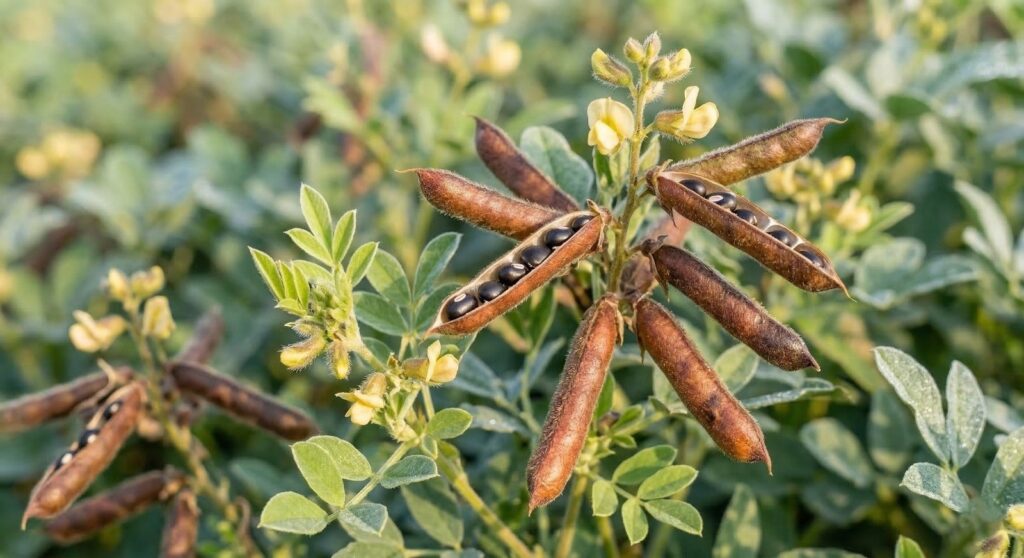
Urad (Black Gram)
Vigna mungo
Pulse Overview
Common Pests
Whitefly (Bemisia tabaci)
Symptoms:
Yellowing leaves; sooty mold deposits; primary vector of yellow mosaic virus.
Leaf Webber (Lampides boeticus)
Symptoms:
Young caterpillars web and roll leaves together; feeding inside the rolled leaf leads to browning.
Common Diseases
Yellow Mosaic Virus (YMV)
Symptoms:
Irregular yellow and green mosaic pattern on young leaves; stunted plants; near-zero pod set.
Treatment:
Destroy infected plants immediately; no chemical cure available.
Leaf Crinkle Disease (Urd Bean Leaf Crinkle Virus)
Symptoms:
Severe leaf crinkling and curling; dwarfed plants; complete reproductive failure in infected plants.
Treatment:
No chemical treatment — remove infected plants and manage insect vectors.
Soil Requirements
Urad grows on a wide range of light to medium soils. It is particularly adaptive to the black cotton soils of Andhra Pradesh and vertisols of Tamil Nadu. Good drainage is essential — the crop does not tolerate waterlogging at any stage.